Saturday, April 16, 2011

A Perspective on Hurston's Novel, Their Eyes Were Watching God

Zora Neale Hurston is revered today as one of the Harlem Renaissance's most talented writers.  One of her extremely well known novels, Their Eyes Were Watching God, is looked upon today as a literary masterpiece.  It combines the realistic dialect of the southern town in which she lived with the beautiful metaphorical and symbolic language for which Hurston is widely known.  Despite such positive thoughts on the novel today, there were some very harsh reviews of the novel at the time it was written.  These reviews ultimately forced Hurston to stop writing altogether.
Of the harsh African American reviewers is Richard Wright.  Wright, in his 1937 review, said, “The sensory sweep of her novel carries no theme, no message, no thought. In the main, her novel is not addressed to the Negro, but to a white audience whose chauvinistic tastes she knows how to satisfy. She exploits that phase of Negro life which is ‘quaint,’ the phase which evokes a piteous smile on the lips of the ‘superior’ race.”  Wright describes the lack of theme, message, and thought in Hurston’s novel.  He says how Hurston specifically catered to the white race in the writing of this novel.  Perhaps he was looking for an accurate political and social account of African American life at the time, and that was simply not what he got from this novel.
In my opinion, I strongly disagree with Wright’s, as well as other similar reviewers’, account of Their Eyes Were Watching God.  Wright says the novel strongly lacks theme, message, and thought; however, I find it hard to not notice Hurston’s use of beautifully crafted metaphorical and symbolic language, as well as her vivid use of imagery.  I do not think that Hurston goal in writing this novel was to give a politically and socially accurate account of African American life at the time, but rather a story about growing up, love, and coming of age.  Hurston was telling Janie’s story, which was filled with the aforementioned themes, rather than the real-life aspect for which Wright longed.  Zora Neale Hurston’s Their Eyes Were Watching God  is a literary masterpiece in my mind, as well as the minds of so many other people in the literary world.


Monday, April 4, 2011

Who is Zora Neale Hurston? I'll Tell You! Just Kidding - You're Going to Have to Read On to Find Out.

Zora Neale Hurston
  • Zora Neale Hurston was born in 1891 in Notasulga, Alabama.  She was raised in Eatonville, Florida.
  • Hurston received an education from Howard University, Bernard College, and Columbia University.
  • As a writer of fiction, Hurston is praised for her story telling abilities, her metaphorical language, and her "interest in and celebration of Southern black culture in the United States" (Microsoft Student Encarta).
  • One of her best known works is Their Eyes Were Watching God, which was published in 1937.  This novel tells the story of a woman searching for her true identity and a community where she can develop and further explore that identity.
  • Hurston also wrote many other novels including Jonah's Gourd Vine, published in 1934; and Seraph on the Suwanee, published in 1948.  She also wrote plays, journal articles, and short stories.  Her autobiograpy, Dust Tracks on a Road, was published in 1942
  • Recurring themes of Hurston's work include race and gender.  She related these themes to the search for freedom within the African American community.
  • Hurston died in 1960 from miscellaneous health problems.  She died unnoticed and unrecognized by the literary community.
  • In the 1970s, the new generation of writers discovered Hurston's work.  One of the most famous writers to take interest in Hurston's work was Alice Walker.
  • Becuase of writers like Alice Walker and the newfound of many people in Hurston's writings, many of her writings were rereleased.
  • Hurston's work had a great influence on future writers including Ralph Ellison, Alice Walker, and Toni Morrison.
Wasn't that just some wonderful information?  Do you feel enriched?  I sure do.  Anyway, below are some pictures of Zora Neale Hurston.


**All information was acquired from Microsoft Student Encarta.**


Friday, March 25, 2011

Their Eyes Were Watching . . . The Harlem Renaissance!

Welcome back!  Only one more quarter  !  We can do this!  Anyway, our next literary project in our Freshman Honors English (I'm so creative...typing our class name in purple) Safari Adventure is Their Eyes Were Watching God.  Here is some cool information on the Harlem Renaissance, as it is a major element of this novel.


  • The Harlem Renaissance was a major African American cultural movement centered in the New York City neighborhood of Harlem.
  • It began in the 1920s and lasted until the early 1930s.
  • This was the first time mainstream publishers noticed and took seriously African American arts.
  • The movement mostly concerned literature; however, it aided in the future development of African American music, theater, art, and politics.
  • The movement began following a number of events in the early twentieth century.  These events include the establishment of a black middle class and the Great Migration - a huge movement of hundreds of thousands of African Americans traveling from the rural South to the industrial North.
  • Harlem eventually became the cultural and political center for African Americans,  This was because of the movement of many "educated and socially conscious African Americans to the area" (Microsoft Student Encarta).
  • There had been some artistic and cultural development of African Americans before the Renaissance in the late nineteenth century.
  • A major landmark literary work was written by Claude McKay and was published by a mainstream publisher, making it one of the first African American literary works to accomplish this.
  • A major event that jumpstarted the Harlem Renaissance occurred in 1924.  Charles S. Johnson of the National Urban LEague hosted a dinner to introduce the new African American talent at the time (including McKay) to New York's White Literary Establishment.
  • The Harlem Renaissance is not defined by any one literary or artistic style, but rather the common view and goal of those involved in the movement.
Source: Microsoft Student Encarta: The Harlem Renaissance

Jessie Redmon Fauset


  • Jessie Redmon Fauset was born in 1882 in New Jersey and grew up in Philidelphia, Pennsylvania.
  • She graduated Phi Beta Kappa from Cornell University in 1905.  She was at least the first black woman to graduate from this university.
  • She paved the way for future African American women to pursue their education and attend college.
  • She worked closely with W.U.B. DuBois as literary editor of the NAACP magazine.
  • The majority of her poetry talks about romance and racial identity.


Below are some images of famous artists of the Harlem Renaissance period, as well as some information about each.

Lois Jones

  • Lois Jones attended the School of the Museum of Fine Art in Boston, MA.  She attended school here during a time of great racial prejudice and tension.
  • Jones, despite the issues of the racial relations issues of the society in which she lived, was very driven to pursue her art career.  Her love for art greatly surpassed the influence of any outside issues of the world.
  • Jones sometimes entered her own paintings into exhibitions that did not accept work from African Americans.  She avoided this problem by having her white friends deliver her work for her.
  • Even though she managed to enter her work into these exhibitions, she still faced a problem: the prize.  When a prize was awarded to her, it was taken away and given to a white competitor when it was discovered that she was black.
  • Lois Jones was driven to use her talent, time, and energy for positive things.  She was beyond these ridiculous racial boundaries of the time, and she was not going to let the color of her skin ruin her love and passion for art.


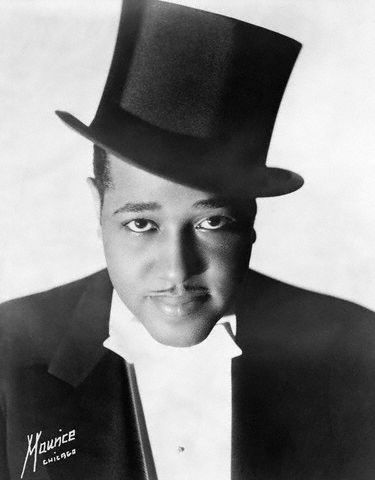
Duke Ellington


  • Duke Ellington was born to a middle class family in Washington, D.C.


  • He started playing piano at the age of seven.  His passion for the arts was fueled since an early age.


  • He received a scholarship to Pratt Institute in Brooklyn, New York; however, he declined the offer.  Instead, he began playing in Broadway nightclubs.


  • Ellington put together a band and began playing at the Cotton Club.  This lasted from 1922 to 1931.


  • Ellington gained major national exposure from playing here, thanks to the radio shows broadcasting from the club.


  • Thursday, March 24, 2011

    Characterization Chart!

    Our class just finished reading Jon Krakauer's Into the Wild.  This chart is the culmination of a deep and comprehensive analysis of Chris McCandless and his character.  


    Into the Wild Characterization Chart
    Travis Nelson
    Honors English 9
    Chapter
    Direct
    Indirect
    1
    Chris appeared young, only about eighteen or nineteen (3).

    He was afraid of the water (5).
    Chris was stubborn and wanted to follow his own rules.  He didn’t want other people regulating his life, actions, and choices.
    “’Hell, no,’ Alex scoffed.  ‘How I feed myself is none of the government’s business.  F*** their stupid rules’” (6).
    2

    Chris didn’t want to be identified.  He seldom gave away personal information of his adventure, and wanted to begin a new life, in a sense.
    “But because he had been carrying no identification, the authorities didn’t know who he was, where he was from, or why he was there” (14).
    3
    “hard, stingy physique of an itinerant laborer” (16)

    Dark, emotive (16)

    Sensitive good looks (16)
    Chris was definitely not a fan of material things, which included exchanging them with others.
    “She was surprised and extremely touched: It was the first present she had received from her son in more than two years, since he had announced to his parents that, on principle, he would no longer give or receive gifts” (20).

    Chris was very much interested in taking his life where he wanted to take it.  He didn’t want others telling him what to do; he wanted to be in charge of his life.  He even went as far as to create another name for himself.
    “To symbolize the complete severance from his previous life, he even adopted a new name.  No longer would he answer to Chris McCandless; he was now Alexander Supertramp, master of his own destiny” (23).
    4
    Chris was nice, happy (30).
    Chris was determined to continue on his adventure and wasn’t afraid to leave the material possessions that were holding him back.
    “But there was a way to avoid such aggravation: He could simply abandon the Datsun and resume his odyssey on foot.  And that’s what he decided to do” (29).
    5
    Chris was a good worker; he was dependable (40).
    Chris was not the most careful person when it came to interacting with other people.  A man caught him shaving in a bathroom, and he told Chris he could come stay in his trailer, which actually wasn’t even his own.
    “One morning I was shaving in a restroom when an old man came in, and observing me, asked me if I was “sleeping out.”  I told him yes, and it turned out that he had this old trailer I could stay in for free.  The only problem is that he doesn’t really own it” (41).
    6
    Chris was polite, friendly, and well-groomed (50).
    Chris believed that his way of living was great; he wasn’t afraid to try to convince others to live the same way.  After meeting Ronald Franz, Chris began to tell him about his new way of life and that he should do the same.
    “He also turned the tables and started lecturing the grandfatherly figure about the shortcomings of his sedentary existence, urging the eighty-year-old to sell most of his belongings, move out of the apartment, and live on the road” (51).
    7
    Chris was a big eater and a good cook (63).

    Chris was sometimes outgoing and very personable (65).

    Chris was chaste and morally pure (65).
    Chris was always willing to help others; however, he held his own priorities very high.  He promised to help Westerberg, but only until it was time for him to continue his adventure into Alaska.
    “McCandless promised to come back to South Dakota in time to help with the autumn harvest, but he wanted to be in Fairbanks by the end of April in order to squeeze in as much time as possible up North before his return” (62).

    Chris could be a very sociable and outgoing person.  He was able to keep a great conversation going with person whom he had just met.  Mary Westerberg, Wayne Westerberg’s mother, came to like Chris very much.
    “They hit it off immediately.  The two of ‘em talked nonstop for five hours” (67).
    10
    Jim Gallien describes Chris and odd and congenial (98).

    Chris had short hair and was clean-shaven (102).
    This comes back to a few aforementioned points.  Chris did not care for official documentation of who he was, probably because, again, he did want other monitoring him, telling him how to live, and what to do.  Chris did not take the first W-4 form Westerberg had given him seriously.
    “Across the top of the first one, dating from McCandless’s initial visit to Carthage, in 1990, he had scrawled ‘EXEMPT, EXEMPT, EXEMPT, EXEMPT’ and given his name as Iris Fucyu.  Address: ‘None of your damn business.’  Social Security number: ‘I forget’” (101).
    11
    Chris played the piano, French horn, and guitar.  He was talented at music, and he sang decently (110).

    Had a great relationship with Carine.  He was very nice to and extremely protective of her (110).

    Inherited his mother’s “angelic” features, specifically her eyes (110).

    For his size, Chris was strong and well-coordinated (110).
    Chris took his education very seriously.  He had great, almost perfect grades, and was always bringing home A’s; however, Chris once got a grade lower than a B.  In high school physics, Chris received an F; he did not agree with his teacher that the format of the lab report was equally important as the content of which it consisted.
    “Academically he brought home A’s with little effort.  Only once did he receive a grade lower than a B: an F, in high school physics (109).
    12
    Chris could be generous and caring at times, but he also had a darker side, which was characterized by “monomania, impatience, and unwavering self-absorption, qualities that seemed to intensify through his college years” (120).

    Chris was passionate and intense in his writing, specifically for the Emory University newspaper (123).
    Chris, although he developed a negative view of his parents, showed that he was grateful for what his parents had done for their family.  Also, he admired them for acquiring all that they had from nothing.
    “Chris said how much he respected Dad for starting from nothing, working his way through college, busting his ass to support eight kids.  It was a moving speech.  Everybody there was all chocked up.  And then he left on his trip” (118).
    13
    Chris was around ‘5”8 tall (128).

    Chris was energetic and self-assured.  He was a high achiever and was always quick to state his opinion (129).
    Chris cared very much for Buckley, the family dog.  His family though that maybe things would’ve been different if they would’ve let Chris take Buckley along with him.  They though that because he cared for that dog so much, he wouldn’t have risked his life in the ways that he did, which would ultimately have prevented his unfortunate death.
    “’Chris didn’t think twice about risking his own life, but he never would have put Buckley in any kind of danger.  There’s no way he would’ve taken the same kind of chances if Buck had been with him’” (128).
    16
    Chris’s use of sophisticated and intelligent language showed that he was a sharp individual (159).
    Chris was an intelligent person, and he enjoyed reading.  He carried along with him many books, including novels by Thoreau, Tolstoy, and Gogol.  These books were the heaviest items in his backpack.
    “The heaviest item in McCandless’s half-full backpack was his library: nine or ten paperback books, most of which had been given to him by Jan Burres in Niland . . . He simply carried what he might enjoy reading . . .” (162).
    17

    Chris was always looking for more freedom and openness than is offered in our society.  This is a recurring theme of Chris and the novel itself, as Chris was always looking to free himself from material possessions and negative people.  He was also looking for more adventure, which would explain his many travels.
    “Andy Horowitz, one of McCandless’s friends on the Woodson High cross-country team, had mused that Chris ‘was born into the wrong century.  He was looking for more adventure and freedom than today’s society gives people’” (174).

    Generally, whenever Chris wanted to do something (specifically embark on an adventure), he wanted to get up and go.  He did not want to have other people try to tell him what he needed, what to do, what not to do, and etcetera.  He was stubborn in this way.  Some people say that his arrogance and stubbornness was responsible for his death.
    “By design McCandless came into the country with insufficient provisions, and he lacked certain pieces of equipment deemed essential by many Alaskans: a large caliber rifle, map and compass, an ax.  This has been regarded as evidence not just of stupidity but of the even greater sin of arrogance” (180).
    18
    Towards the end of his life, Chris appeared very emaciated and dangerously thin.  He is described as “skeletal (199).
    Chris, though he became very weak over the last few weeks of his life, was very calm and content with himself and what he done at the time of his death.
    “He is smiling in the picture, and there is no mistaking the look in his eyes: Chris McCandless was at peace, serene as a monk gone to God” (199).

    Into the Wild Final Project!

    As we finish Into the Wild, our English class is working on projects of different types to finish off our journey with Chris McCandless.  For my project, I chose to put several of Chris's favorite quotes on a posterboard with different images of his favorite authors.  I think this a great way to analyze Chris's final moments of life and what he held dearly.  We are now leaving the wild!


    Saturday, March 19, 2011

    Visiting a Place That Would Change My Life . . .

             An adventure that would change my life would be to another country. I know this sounds general, but going to another country would allow me to experience life outside of the United States, where I have been all of my life. I would be around an entirely different group of people who speak another language, eat different food, and live differently. I think that in order to realize the true diversity of our world, we have to travel different places. Different parts of the world have a lot of things that cannot be found in the United States, just as there are a lot of things in the United States that cannot be found anywhere else. I think this would be a wonderful experience to have.